• What Older Homes in Buford Taught Me About Prioritizing Maintenance

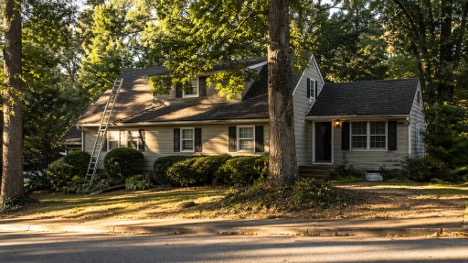
    Older home in Buford GA with mature trees and visible signs of routine maintenance in a quiet neighborhood

    The first time I owned an older home in Buford, I almost made a $20,000 mistake within the first year.

    Nothing looked wrong at a glance. The kitchen had been updated, the paint was fresh, and everything felt move-in ready. But a few months in, after a stretch of heavy summer rain, I found moisture building up in the crawl space. Not long after that, the HVAC system started struggling to keep up with the heat.

    That was the moment it clicked. Older homes don’t fail all at once. They fail where maintenance was delayed.

    If you’re buying or already living in an older home in Buford, Georgia, understanding what to prioritize can save you a lot of money—and stress.

    Key Takeaways
    • Focus on structural and mechanical systems before cosmetic upgrades
    • Many older Buford homes hide deferred maintenance behind updates
    • Prioritizing correctly can save thousands over time
    • Georgia’s humidity accelerates wear on roofs, crawl spaces, and HVAC systems
    • Having trusted service contacts early prevents bigger issues later
    • Appliances often fail sooner than expected and should be planned for

    Why Older Homes in Buford Are Still Worth It

    Buford sits in Gwinnett County, close enough to Atlanta for convenience but far enough to keep a slower pace. The older neighborhoods—especially those closer to downtown or tucked near Lake Lanier—offer something newer developments usually cannot.

    You’ll notice it right away. Larger lots. Mature trees. Homes that feel established rather than newly dropped into place.
    Many of these houses were built in the 1970s and 1980s, before aggressive cost-cutting became standard in residential construction. The framing tends to be solid. The layouts are practical. And the neighborhoods have had decades to settle in.

    But there’s a trade-off.

    When you buy an older home, you’re not just buying the structure. You’re inheriting every maintenance decision the previous owners made—or avoided.

    The Most Common Mistake I See

    People fix what looks outdated instead of what actually matters.

    It’s understandable. A new kitchen or updated fixtures make a home feel complete. But those upgrades don’t mean much if the roof is near the end of its life or moisture is quietly building under the house.

    Buford’s climate doesn’t give you much margin for error. Long, humid summers keep crawl spaces damp. HVAC systems run hard for most of the year. Roofing materials break down faster than many people expect.

    Ignore those systems, and cosmetic work becomes temporary.

    What to Fix First in an Older Buford Home

    Start With Function, Not Appearance

    When I walk into an older home now, I don’t pay much attention to finishes. I’m looking at how the house performs.

    Roof

    If there’s one place to start, it’s here.

    In Buford, roofs typically last around 15 to 20 years, sometimes less, with constant sun exposure and humidity. Granule loss, soft spots, or poorly installed flashing are all early warning signs.

    Replacing a roof isn’t cheap. Depending on the home, it can run anywhere from $8,000 to $18,000 or more. It’s not something you want to discover after closing.

    HVAC System

    Georgia heat puts HVAC systems under constant strain.

    Most units last about 10 to 15 years in this environment. Once they pass the 12-year mark, I start assuming replacement is coming unless there’s clear documentation of consistent maintenance.

    Service history matters more than appearance here. A clean-looking unit doesn’t tell you how hard it’s been working.

    Crawl Space

    This is where many expensive problems begin.

    Moisture is persistent in Buford, especially in homes built before modern vapor barriers and sealing practices became common. Left unchecked, it leads to mold, wood rot, and eventually structural damage.

    Encapsulation can feel like a high upfront cost, but in many cases, it’s one of the best long-term investments you can make in an older home.

    Electrical and Plumbing

    Homes built before 1990 often come with systems that weren’t designed for today’s demands.

    That might include aluminum wiring, outdated panels, or galvanized pipes that are already restricting water flow.

    These aren’t cosmetic concerns. They affect safety, reliability, and insurance in some cases. I always evaluate these early, even if there are no obvious issues yet.
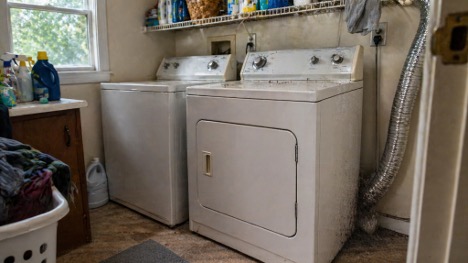
    Laundry room in an older home with a dryer and visible lint buildup near the vent, showing a common maintenance issue

    The Lesson I Learned About Appliances

    Appliances are easy to overlook because they’re still working—until they’re not.

    In my case, the dryer started taking longer to finish a cycle. It didn’t seem urgent, but I had it checked anyway. If you’re dealing with something similar, getting help from a local service that handles appliance repair in Buford early can prevent bigger problems.

    Since then, I’ve treated appliances differently.

    When I move into a home, I document the age of everything—washer, dryer, refrigerator, water heater. From there, I plan ahead rather than wait for failure.
    A simple rule I follow: if a repair starts approaching half the cost of replacement and the unit is already older, I start leaning toward replacing it.

    When Cosmetic Updates Actually Make Sense

    Once the major systems are stable, cosmetic improvements become much more worthwhile.

    This is usually the point where the house stops feeling like a project and starts feeling like your home. You’re no longer reacting to problems. You’re making intentional choices.
    In older homes around Buford, the best results often come from working with what’s already there rather than replacing everything outright. Original hardwood floors, solid wood trim, and even older windows tend to have a level of quality that’s expensive to replicate today.

    I’ve seen homeowners get greater long-term value by restoring rather than starting over.

    That said, when you do move into upgrades, especially in kitchens and bathrooms, the decisions go beyond just design. Where you source materials can affect cost, durability, and overall outcome. If you’re weighing your options, this guide on choosing bathroom products: showroom inspiration or online convenience breaks down what to consider before buying.

    Simple updates like repainting, refinishing floors, or improving insulation often deliver more value than jumping straight into a full remodel. Get the timing right, and those upgrades actually last.

    Why Location Still Matters Within Buford

    Buford has grown quickly, especially toward Braselton and Hamilton Mill. New construction is everywhere.

    But the older neighborhoods, particularly those closer to downtown Buford or near Lake Lanier, still hold a different kind of appeal.

    They feel established. The lots are more generous. The surroundings aren’t constantly changing.

    Buyers are starting to notice that again.

    Well-maintained older homes in these areas are becoming more competitive, not less. And that makes proper maintenance even more important if you want to protect long-term value.

    What Experience Has Taught Me

    I’ve seen two very different outcomes.

    One homeowner spent around $25,000 updating a kitchen while ignoring moisture issues under the house. Within a couple of years, they were dealing with repairs that could have been prevented entirely.

    Another buyer took a less updated home, focused on the roof, crawl space, and HVAC first, and slowly improved everything else over time. The house appreciated, and the maintenance stayed manageable.

    Same type of home. Completely different results.

    The difference comes down to order.

    Handle the systems first. Everything else can wait.

    Frequently Asked Questions

    Are older homes in Buford a good investment?

    Yes, especially in established neighborhoods near downtown or Lake Lanier. The condition of the home matters more than its age.

    How much should I budget for maintenance?

    A common guideline is 1 to 2 percent of the home’s value annually. For older homes, it’s safer to expect closer to 2-3% in the first few years.

    What problems are most common?

    Crawl space moisture, aging HVAC systems, roof wear, and outdated electrical or plumbing are the most frequent issues.

    Is it worth restoring original features?

    In most cases, yes. Original materials often add more long-term value than modern replacements.

    When should I repair versus replace an appliance?

    If the repair cost approaches half the price of a new unit and the appliance is already older, replacement usually makes more sense.

    Closing Thoughts

    Older homes in Buford aren’t risky—they just require a different approach.

    The biggest shift for me was learning to prioritize what keeps the house running, not just what makes it look better.

    Once the roof, HVAC, crawl space, and core systems are taken care of, everything else becomes easier—and more rewarding.

    Get that order right, and these homes offer something newer builds often can’t: character, stability, and long-term value that grows with the way you take care of it.

    partnered post • partner images

  • Things People Don’t Consider When Choosing a Town to Live In

    13137730104_c97532c0b6_k

    Looking for a home or apartment is more complicated than it may appear. For someone who has never done it before, it may seem as though you simply look for places you like within a price range you can afford. In actuality, however, there’s a lot more to it. Similar to selecting a destination to travel to, you want a location that encompasses everything that accommodates your needs and interests. You look at more than just the hotel or vacation rental, but the local culture, activities, attractions, and more. 

    Though on a larger scale than choosing a vacation destination (you’ll be living in your home or apartment a lot longer than you’ll be on vacation), it is important to be thorough in your research about the property, the neighborhood, and other factors to ensure it is in fact a town where your immediate and long-term needs and interests are met. 

    With that being said, beyond finding the perfect home or apartment in the right price range, here are some other things to consider before deciding which town to make your new home: 

    Local Government

    You don’t have to be a political person, but you should know about the local government wherever you plan on moving to. These are the people that make decisions for the city you choose to reside in. They are responsible for the parks and recreation, housing services, emergency medical services, public works, public transportation, the police and fire departments, building codes, and much more. Though no local municipality is perfect, moving into an area that doesn’t line up with what you believe or a government that does not provide adequate services and treatment for their residents can make living there a lot more challenging.

    Cost of Living

    Sure, you can afford the home or apartment you’re interested in moving into, but can you reasonably afford to live in the town you’ve chosen? The cost of living in a particular area is the ballpark amount required to cover basic necessities like housing, taxes, healthcare, food, etc. If you can afford a place to stay but can’t afford to keep up with the taxes, buy groceries, or obtain adequate health coverage, chances are moving to this town will put a financial strain on you.

    Public Transportation and/or Walkability

    Whether you drive a car or not, when deciding which town is best to move to, you should find out about the area’s public transportation or walkability rating. You never know when your vehicle could breakdown causing you to have to use other means of transportation to get around. So, you want to know that there is public transportation that would get you to and from places like your job, your house, a school, or a shopping center for groceries and other necessities.

    If public transportation isn’t highly accessible, then at the very least, things should be easy to walk or ride a bike to (walkability rate). If you wanted to live in Cypress, California, for example, can you easily walk to work, walk the kids to school, or ride your bike to shopping centers or gyms in Cypress? Or, would you have to carpool or use ridesharing services to get to those places?

    Employment Opportunities

    Unless you’re planning on keeping the job you currently have, you’ll need a new one once you move. Before putting a down payment or deposit on a place, find out if you’ll be able to secure a job in the area you’re interested in moving to. There would be nothing worse than getting a place and then going into foreclosure or getting evicted because you couldn’t find a job to keep up with the expenses. Do research to not only see if there are opportunities available, but that these opportunities are aligned with your skills, education, and professional area of expertise.

    School Systems

    If you’re relocating with children, doing a thorough investigation into the school systems is also recommended. It is not enough that a city or town has schools, but how effective are these schools in providing an education to their students? What resources do they have? What’s the teacher to student ratio? Where do they rank in the local and national standardized testing each year? How large are their graduating classes? What type of curriculum do they use? These are all necessary questions to have answers to before deciding to move into a town where your children will essentially grow up.

    Your next home purchase or apartment rental is more than just about what you like about the property and what you can afford. It is essentially choosing a place for you and potentially your family to reside for years to come. In order to ensure that your immediate and long-term needs and desires are met, it is imperative that you go beyond the purchase or rental price and look at factors like the local government, transportation, school systems, cost of living, and employment opportunities such as described above.

    brought to you by our site supporters • cc-licensed image by Robert Huffstutter

  • EcoTop: a truly green countertop material that you can afford

    Picture_2
    Regular readers know that I’m not a fan of modern architecture, but that I love modern materials – especially those that aren’t visibly avant-garde and can work in old homes just as well as new. That is, green materials – not just greenwashed products, but truly enviro-neutral or -friendly materials. One of my pet peeves is building materials that are recycled or recyclable – one or the other – but not both; many of these materials are lauded in the popular press for being "ecological," but aren’t really.

    Joel Klippert, a young man living just outside of Seattle, has really turned this specific market around. With a little help from some very talented research chemists and materials scientists, he’s created the very  first recycled, renewable and fully-recyclable countertop material. EcoTop, a successor to his extremely successful PaperStone product, is 50% pulped bamboo paper fiber and 50% recycled wood – sometimes called "urban timber," the structural wood salvaged from demolished buildings. He’s worked for years to find a non-petroleum resin that was UV resistant, so that he could avoid using only dark colors (the resin used in earlier materials had to be dark to avoid the yellowish cast that would develop over years of sun exposure). Now that he’s found that and reliable sources for his two structural ingredients, EcoTop can hit the market – in a range of colors ranging from white to black, with an enormous range of shades of green, tan, red, brown and gray in between. In fact, Joel says he can match any PMS (Pantone Matching System) shade that a client can specify, if the order is large enough.

    EcoTop is not only a beautiful, extremely durable and truly green material – right at home in any kitchen or bath, new or old – it’s also really affordable and easy to install, competitive with natural stone and significantly less expensive than concrete installations. If anything, I think that materials like this are even more apropos in an Arts & Crafts home than stone or tile: their makers take their responsibility to the outside environment just as seriously as their responsibility to the inside of your home, something that is much more in line with the tenets of the movement than nonrecyclable materials which, no matter how green their production process, end up filling a landfill when you (or, in the case of something like EcoTop, which will last generations, when some far off future owners of your home) are done with them.

    Note that this material is also available as an exterior cladding for large residential and commercial / industrial applications.

  • historic window workshop in Sacramento, CA

    Sacramento’s Sierra Curtis Neighborhood Association and the Sacramento Bungalow Heritage Association are fighting a winning battle against cheap, unsightly and – in the long run – inefficient and environmentally damaging vinyl, aluminum and composite windows. Their solution? Fix your old wooden windows before switching over to something that seems like a good deal – but actually isn’t.

    This coming October 6 and 7, they’re offering two workshops on the basic repair, maintenance, weatherization and repair of historic wood windows.

    Volunteer instructors from the community will demonstrate how they worked on their own windows, preserved the character of their historic homes, and saved their pocketbooks!  Historic windows were made to be taken apart and repaired, and with basic guidance, anyone can make their windows work as they originally did – with ease of operation and weather tight – and beautiful!

    We ran a short piece about these workshops and the woman behind them two years ago; again, much thanks to Janice Calpo not only for the heads-up, but more importantly for making Sacramentans aware of the benefits of our old homes’ original windows!

  • Arts & Crafts gems shine in Berkeley’s velvet hills

    I was going through SFGate.com’s home section archive and found this great piece by R.W. Apple, Jr. (the New York Times‘ architecture critic), originally published in that paper in 2003:

    "Westward the course of empire takes its way," wrote the 18th century
    Irish philosopher Bishop George Berkeley, so the 19th century founders of a
    little city directly across the bay from San Francisco, almost at the western
    extremity of the American empire, chose to name it after him.

    Many famous men and women have walked its streets — Ernest O. Lawrence,
    the remarkable physicist who invented the cyclotron; Clark Kerr, who helped
    develop the nation’s best statewide system of higher education; Mario Savio,
    the leader of the radical Free Speech Movement during the turbulent 1960s; and
    in our own day Alice Waters, arguably the nation’s greatest restaurateur.

    Another — too little known, at least beyond Northern California — is the
    architect Bernard Maybeck, a precursor of the modern movement like Otto Wagner
    in Vienna, Charles Rennie Mackintosh in Glasgow, Victor Horta in Brussels and
    the brothers Charles and Henry Greene in Pasadena.

    Much that he saw and so brilliantly succeeded in grasping still stands
    today in Berkeley, on and near the campus of UC Berkeley and in the hills
    above it, in the north side neighborhood where Maybeck lived for most of his
    life (1862-1957). More than anyone else, he made Berkeley one of the nation’s
    architectural treasure-troves.

    read the whole thing

  • Small Houses and the Question of Need

    Carol Lloyd has a good article at SFGate (the San Francisco Chronicle‘s site) on extremely tiny homes:

    Down a rambling residential road on the outskirts of Sebastopol, the dream house sits like a testament to discriminating taste.

    This dream house is the love child of artist-builder Jay Shafer,
    who lovingly hand-crafted it. The stainless-steel kitchen, gleaming
    next to the natural wood interior, is outfitted with customized storage
    and built-ins. From his bed, Shafer can gaze into the Northern
    California sky through a cathedral window. In his immaculate office
    space, a laptop sits alongside rows of architectural books and
    magazines — many featuring his house on the cover. And from the
    old-fashioned front porch, he can look out on a breathtaking setting:
    an apple orchard in full bloom.

    But in an era when bigger is taken as a synonym for better,
    calling Shafer’s home a dream house might strike some as an oxymoron.
    Why? The entire house, including sleeping loft, measures only 96 square
    feet — smaller than many people’s bathrooms. But Jay Shafer’s dream
    isn’t of a lifestyle writ large but of one carefully created and then
    writ tiny.

    Read the whole thing.

  • East Bay (California) homes for sale

  • “Shelterporn” from Houstonist: big profits in Texas

    Houstonist‘s every-Saturday Shelterporn section focused on a really pretty bungalow in last weekend’s edition:

    Longtime shelterporn readers will know that we’re most partial to two
    kinds of houses: clean, contemporary designs and traditional bungalows.
    Frankly, though, it’s the bungalow that really makes us think "home" —
    and so it’s only natural that we fell in love with this Heights beauty at first sight.

    At $599K, it’s no bargain, whatever that means, but I can’t speak to relative prices, not having much knowledge of Houston’s current real estate climate. However, based on the last selling price and the square footage price of other homes in the neighborhood, Zillow estimates the home’s value at $187,915, which certainly seems a bit more realistic.

    Adam Wells, president of Clerestory Homes, says that the upgrades and renovations were extensive:

    This project was definitely a labor of love for our company. It is
    an original 1920s bungalow that was extensively remodeled and
    renovated. We added ~1,900 sq.ft. to the original ~900 sq.ft.
    footprint.

    You can see previous sales data here; looks like a flipper or the developer bought it for $160,656 last year – so a more than 300% increase in price. It’s just too bad that people are priced out of neighborhoods they’ve lived in for years, and entire areas are ghettoized, by profiteering and personal greed. That said, the house itself is beautiful, inside and out, and apparently the buyer is very happy with her purchase.

  • for sale: restored Horseheads NY home, $199,500

    From Martha Horton’s recent article in the Star-Gazette‘s Twin Tiers Homes section:

    John
    Stevens, a Horseheads native, studied architecture at Cornell
    University, and his wife Rosemary, originally from Owego, is a Cornell
    graduate, but the two did not cross paths on campus. They met later,
    when Rosemary was employed with Corning Inc. and John, an independent
    electrician, was doing work there.

    John
    had purchased a Craftsman-style house in the Village of Horseheads in
    1993 from the Shappee estate. The original owner, who built the house
    in 1920, was James Shappee, a prominent citizen and foundry owner. His
    caricature by famed cartoonist Zim hangs in the Zim Center in
    Horseheads. James’ wife Febe was a Horseheads school principal.

    When
    Rosemary, an interior designer, first saw the house, she recognized its
    "good bones," and thought it was well worth preserving and updating. So
    the couple went to work on it, doing most of the labor themselves. "We
    worked on the house every day after work," Rosemary recalls, "and every
    weekend." They are still working on it.

    John
    did extensive rewiring and updated the heating system. Rosemary, who
    now operates her own interior design firm under the name of "Designs by
    Rody," masterminded the aesthetics. "I wanted to keep the house in
    character and bring it forward as it would have evolved through the
    years," she explains. "Houses talk to you," Rosemary adds.

    The 3+ bedroom, 4 full bath, almost 4000 square foot house is listed by Kristen Dininny, a real estate agent with Signature Properties. There’s a map here.

    Of course, where I live, a house like this would sell for well over $450,000, even with the market falling a bit in the past year. It’s almost tempting to move to New York and try to make a living doing freelance work or by beefing up this site and trying to make some money from the advertising … the $200,000 cash I’d walk away with from the sale of my own smaller home would cover expenses for several years.