• The Difference Between an Arborist and a Tree Trimmer

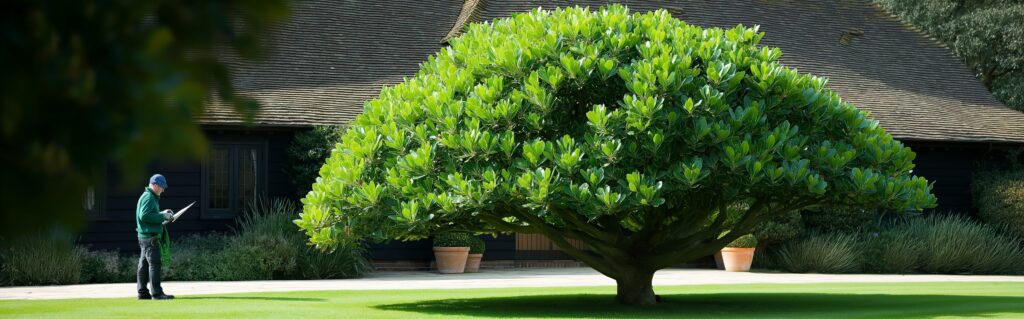
    arborist inspecting trees

    Professional arborists offer a variety of services, from insect and disease control to growth regulators and tree treatments, as well as tree root fertilization. These and other tree maintenance solutions can help improve tree health and support local ecosystems in residential properties. The roles of an arborist extend beyond those of tree trimmers, who mainly focus on basic cutting or pruning and shaping of trees. Here are a few key differences between an arborist and a tree trimmer:

    Service Scope

    Arborists focus on promoting the long-term health of trees through services like tree diagnoses and injections or treatments. This makes an arborist an ideal professional if you want expert help controlling insects and diseases. These experts understand how to assess the unique biological and environmental needs of various species across different areas to provide tailored preventive care, such as tree injections.

    Tree trimmers focus on offering physical tree maintenance services, such as cutting and removing dead trees or branches and pruning. Services from a tree trimmer may be ideal for aesthetic purposes and enhancing safety by removing hazardous branches. An arborist can also help assess your trees’ structural stability and growth patterns to determine ideal preservation methods.

    Specialized Equipment

    An arborist combines both standard pruning tools and specialized diagnostic equipment for a comprehensive assessment of tree health. Tools such as increment borers and resistographs enable an arborist to assess trees for issues such as structural weakness or internal decay. An arborist may also use precision tools such as loppers and pruning saws. These pruning tools enable clean, targeted cutting that aligns with a tree’s biological standards, for faster healing and enhanced health. Tools tree trimmers can use for efficient removal of tree branches and routine shaping include power saws and pole pruners.

    Some specialized techniques a tree doctor may employ include disease treatments, soil aeration, bracing, and cabling. These techniques contribute to improving trees’ structural integrity and prolonging their life. While tree trimmers focus on general pruning techniques for quick branch removal and shaping, arborists take a more tailored approach using specialized tools. Tree trimmers’ equipment is designed for standard, repeatable trimming, whereas arborists can customize their methods to the tree’s specific needs.

    Structural Expertise

    An arborist possesses extensive knowledge of things like tree anatomy, soil interactions, and tree physiology. Professional arborists understand the specific pests and disease risks that affect different types of trees, including magnolias and oaks. This knowledge allows them to accurately assess and address issues such as vascular diseases, root rot, and other threats to tree health. By diagnosing these and other tree issues, an arborist can recommend targeted interventions like fertilization and also conduct tree injections. Since tree trimmers lack expertise in tree biology, they specialize in structural cuts.

    Hire Professional Arborists Today

    An arborist possesses expertise that enables them to conduct health assessments and manage insects and diseases in trees more effectively. Tree trimmers can be ideal for efficiently handling mechanical or physical tree upkeep. Call a trustworthy arborist today to safeguard your trees’ long-term health and aesthetics.

    partnered post
  • Choosing the Right Fixtures for Effective Landscape Lighting

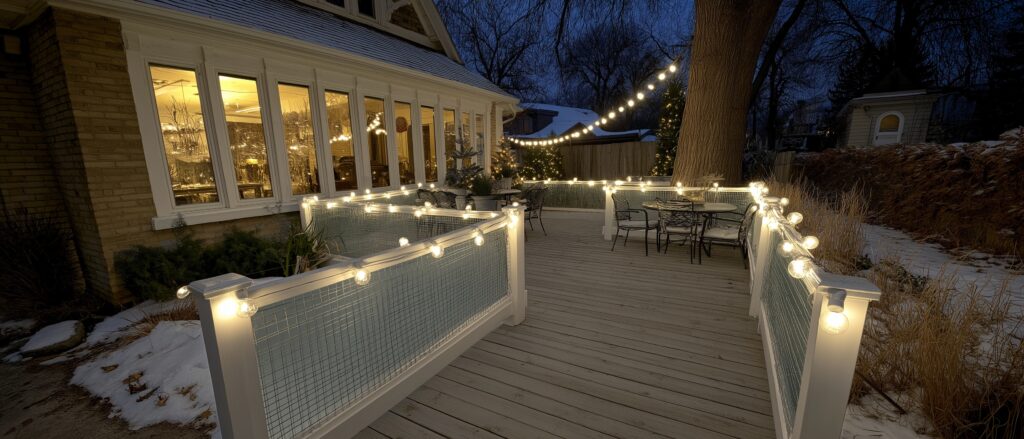
    deck and string lighting

    Selecting appropriate lighting fixtures for walkways, patios, and other outdoor areas is key to creating safe, usable spaces. Each fixture type offers specific functions and design options, and proper landscape lighting is required to achieve reliable performance. Here are a few of the primary fixture categories used in outdoor lighting:

    Outdoor Pathway and Deck Lights

    Pathway landscape lighting appears in forms such as tall cones and small globes. Other options include bollards and shade-covered fixtures that direct illumination downward. Along walkways and driveways, lighting helps people navigate uneven areas and avoid stepping on objects. Because pathway lights do not project direct light toward the eyes, glare during nighttime movement is reduced. These fixtures illuminate the ground and nearby stones more than the surrounding features.

    Deck lights illuminate patios, verandas, and other gathering areas by spreading light across commonly used surfaces. They cast illumination across the floor and railings without projecting into open seating areas, creating a clear visual field for outdoor activities. Some deck lights include adjustable output settings, which allow users to regulate brightness when resting or hosting guests.

    Exterior Uplighting and String Lighting

    Exterior uplighting serves both functional and decorative purposes. Such fixtures are suitable for residential and commercial settings where architectural features or selected objects need illumination. Installation professionals position the systems on walls or elevated surfaces to direct light upward or across specific elements. When fixtures are evenly spaced, they create uniform illumination along building facades, garden structures, or outdoor displays.

    String lighting is installed along outdoor features such as wall edges or overhead frameworks, providing continuous illumination along its mounted path. It delivers a soft and consistent light level when used on patios, garden paths, or covered walkways. The bulbs often come in tube or strip forms arranged in a single line, enabling even lighting across the designated area.

    Pool and Water Feature Lighting

    Lighting for pools and water features often uses low-wattage bulbs to safely illuminate these areas without generating excessive heat. In both commercial and residential settings, fixtures are selected and positioned to enhance the visual appeal of fountains, ponds, and swimming pools while verifying user safety. Placement of lighting fixtures should be carefully planned around water elements to highlight their design and movement without causing glare or uneven lighting. For pools and water features in larger commercial spaces, lighting arrangements may vary rather than follow uniform patterns, creating dynamic effects across open water surfaces. In residential settings, lighting systems often include strips along pool edges or floor-level fixtures to outline water boundaries. Bulbs or tubes that blend with surrounding surfaces help maintain a consistent look while providing gentle illumination that enhances the ambiance without overwhelming neighboring areas.

    Implement Landscape Lighting in Your Space

    Effective outdoor lighting requires assessing how each area is used after dark. A lighting specialist can determine optimal fixture placement and recommend appropriate types for various parts of a property. This evaluation helps guide the selection of lighting systems for residential, commercial, or seasonal applications. Start your search for a lighting expert in your area today.


    partnered post • image by Midjourney

  • Yard Design Ideas for Small Spaces

    1029954331_2491f735be_c

    Your backyard serves as an extension of your home. When the weather allows, it is a place you can retreat to for relaxation, fun, and entertainment. For properties with smaller yards,  the idea of turning it into an outdoor oasis seems impossible. The space seems too small to create anything worth enjoying. Contrary to popular belief, however, there are lots of things you can do with a small backyard. Here are some yard design ideas for small spaces: 

    Create Separate Spaces

    One way to make your yard more functional and appear larger is to divide it up into separate spaces. You might have a patio which would be used for sitting, cooking, and entertainment, a grassy area for the children and pets to run around and play in, and a designated area for a small garden in another corner.

    Install an Outdoor Kitchen

    Adding an outdoor kitchen to your backyard not only adds aesthetic appeal, but it can also help to boost the overall value of your property. If you enjoy preparing meals outdoors or entertaining during warmer weather, an outdoor kitchen can be very instrumental in helping you to enjoy your yard even further. Don’t let the limited space stop you, as there plenty of outdoor kitchen ideas for small spaces outdoor kitchen ideas for small spaces you can draw inspiration from. You can use a portion of your patio and lounge area to install a small stove, a mini-fridge, and a kitchen island. 

    Go Minimal But Comfortable with Furniture

    To truly enjoy your backyard, you need comfortable furniture. While your outdoor space may be small, there are plenty of options when selecting furniture. Instead of a full-sized patio set, you could swing for a small bistro table and a few comfy chairs with cushions. If you feel comfortable, you could ditch the table and chair concept altogether and instead invest in large pillows and bean bags to set up when you’re ready to kick back and relax or share a meal outdoors. Don’t have the room for a firepit? You can always go for a tabletop fire pit instead which can still provide some heat during those chilly nights.

    Another small outdoor furniture item with a big impact is the patio heater. In many parts of the world, outdoor spaces become much less useful in fall and winter; turn that around with one of these, and use your yard for dining and entertaining even when the weather changes! It can be hard to choose the right one for your space, though, so check this useful guide to choosing the best patio heater first at https://www.globosurfer.com/best-patio-heaters.

    Use Planters Instead of a Garden

    Do you like the idea of having fresh fruits, veggies, plants, and flowers growing in your yard? While you may not have much space or a lot of soil to create a traditional garden, that doesn’t mean you have to forego the produce or greenery altogether. Instead, incorporate it into your yard’s layout and decor with the help of planters. A few potted flowers and plants strategically placed on stairs or hung from awnings can liven the space up. A box garden is also easy to build and maintain as well. 

    String Lights for Safety and Ambiance

    A well-lit backyard is ideal for safety and is a great way to set the mood and keep the party going long after the sun goes down. Installing too many outdoor lamps or landscape lighting features can clutter your backyard making it look even smaller. Instead, purchase string lights and hang them from walls, pillars, awnings, and other tall structures. They come in an array of colors and levels of brightness to compliment the rest of your yard’s decor. 

    Finish With Statement-Making Decor

    No outdoor living space is complete without decor to give it more of a home vibe. Just as you would if you were renovating in other parts of your home, think about color schemes and/or themes you’re going for in the yard. Then, do some shopping to find neat items to personalize your space. For instance, you might want to invest in tiles for your patio, cushions for your yard chairs, vases and sculptures for your tables, and water features like tabletop fountains for your tables. 

    When you watch home improvement shows or look at home magazines it can be easy to assume that your small yard can never be transformed into the outdoor sanctuaries that you dream about. While it will take some creativity, compromise, and effort, the reality is that there are plenty of ways to create an extension of your home that can be enjoyed all year long. Hopefully, some of the above-mentioned ideas have given you some inspiration to turn your small yard into a space you can’t wait to relax, have fun, and entertain in. 

    brought to you by our site supporters • cc-licensed photo by Jeff Sandquist

  • Process of Installing a Concrete Driveway

    Screen Shot 2019-08-21 at 10.32.39 AM

    Installing a concrete driveway requires a lot of planning and heavy labor. When well done the drive you will offer service for along time. Below is the process of installing a concrete driveway.

    The most critical requirement of a good solid concrete driveway is the sub-base beneath. Too soft and wet soils make the bearing rock shift, leading to the failure of the concrete. If the substrate is dry or has had proper under drainage installed, placement of a leveling course of a suitable material is then required. 

    After the sub base is set, ensure the angles of the slopes are what you want on top of the concrete. Make sure the grade slopes away from buildings and do not cause any ponding areas and that all the captured water runs to the area you wish it to go.

    Layout the finished driveway using your pins and string line. Set the string to the top elevation of the concrete for the driveway. Once all the string lines are in place, take a look at what you have created. Do the curved areas have neat and smooth lines? Are the square areas square? Are all the slopes correct? If not, make the adjustments. Now install your wood forms, making sure they can handle the pressure from the concrete.

    Once that's done it's time to plan the concrete pours. If the driveway is large, pouring it all at once is not practical and you won't have time to properly install it. A sudden rain shower or broiling sun can cook the concrete or destroy the finished surface. Carefully watch the weather for the day of the pour. Concrete panels should not be poured larger than twenty or twenty-five feet in length and fifteen feet wide.

    A joint expansion material is used after every panel to cater for the expansion and contraction. Sealing the joints prevent water entry to the slabs, controls any weed germination in warmer days and curbs ice forming that may crack the slabs when the climate is cold.

    You can use reinforcing bars on the driveway to prevent ready-mix trucks from accessing the form.

     A good concrete Driveway should be about 3000-pound to 4000 pounds to sustain more weight. Roadway edges should be double-reinforced with bars to block any chipping or cracking. 

    After the concrete is done, smoothing the surface is next. Power trowel gives a smooth surface which is not polished. Other people may prefer a broom to finish the surface.

    If you intend to use colored concrete, all the concrete must be purchased from the same seller. Even if two suppliers use the same dyes, the same stone, and the same water supply, different sands will cause different shades in the finished product. Different brands of dye with the same color name will cause ugly shading in the finished product as well.

    Making the right choice of a concrete contractor for your project is an important stage to help you achieve what you want. There are several key areas that you should focus on as a homeowner.

    Years of Experience

    A contractor like Concrete contractors Bellevue WA with at least five years of experience has been in the business long enough to know the dos and don'ts. The damage is minimal as they are less prone to mistakes. If you are unsure of something, they can guide you on the right path. No one wants a contractor that will end up damaging your property.

    Proper Insurance and License

    The right insurance coverage and licensing are of more importance than experience years. In case an accident occurs to a person or the property is damaged by the contractor, it will be safe for you. Consult with the insurance company to know whether their insurance is valid for the time they will be working for you. 

    References

    Ask for at least five client references from the past two years. Past clients are often a good source for the concrete contractor's past work. You'll find out more information about them from a third-person point of view. A contractor with more positive references shows they are credible.

    Services

    The type of service that a concrete contractor offers is very vital. Some contractors are of specific service others are general in their work. Note carefully what the contractor is specialized in and hire those who are in the line of your project. Those that perform concrete driveway installation should be highly experienced in it.

    partnered post • client image