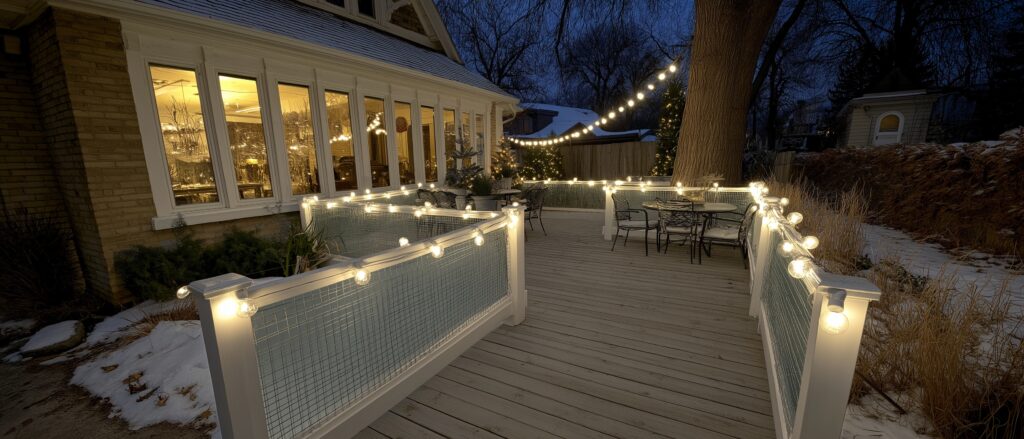
Selecting appropriate lighting fixtures for walkways, patios, and other outdoor areas is key to creating safe, usable spaces. Each fixture type offers specific functions and design options, and proper landscape lighting is required to achieve reliable performance. Here are a few of the primary fixture categories used in outdoor lighting:
Outdoor Pathway and Deck Lights
Pathway landscape lighting appears in forms such as tall cones and small globes. Other options include bollards and shade-covered fixtures that direct illumination downward. Along walkways and driveways, lighting helps people navigate uneven areas and avoid stepping on objects. Because pathway lights do not project direct light toward the eyes, glare during nighttime movement is reduced. These fixtures illuminate the ground and nearby stones more than the surrounding features.
Deck lights illuminate patios, verandas, and other gathering areas by spreading light across commonly used surfaces. They cast illumination across the floor and railings without projecting into open seating areas, creating a clear visual field for outdoor activities. Some deck lights include adjustable output settings, which allow users to regulate brightness when resting or hosting guests.
Exterior Uplighting and String Lighting
Exterior uplighting serves both functional and decorative purposes. Such fixtures are suitable for residential and commercial settings where architectural features or selected objects need illumination. Installation professionals position the systems on walls or elevated surfaces to direct light upward or across specific elements. When fixtures are evenly spaced, they create uniform illumination along building facades, garden structures, or outdoor displays.
String lighting is installed along outdoor features such as wall edges or overhead frameworks, providing continuous illumination along its mounted path. It delivers a soft and consistent light level when used on patios, garden paths, or covered walkways. The bulbs often come in tube or strip forms arranged in a single line, enabling even lighting across the designated area.
Pool and Water Feature Lighting
Lighting for pools and water features often uses low-wattage bulbs to safely illuminate these areas without generating excessive heat. In both commercial and residential settings, fixtures are selected and positioned to enhance the visual appeal of fountains, ponds, and swimming pools while verifying user safety. Placement of lighting fixtures should be carefully planned around water elements to highlight their design and movement without causing glare or uneven lighting. For pools and water features in larger commercial spaces, lighting arrangements may vary rather than follow uniform patterns, creating dynamic effects across open water surfaces. In residential settings, lighting systems often include strips along pool edges or floor-level fixtures to outline water boundaries. Bulbs or tubes that blend with surrounding surfaces help maintain a consistent look while providing gentle illumination that enhances the ambiance without overwhelming neighboring areas.
Implement Landscape Lighting in Your Space
Effective outdoor lighting requires assessing how each area is used after dark. A lighting specialist can determine optimal fixture placement and recommend appropriate types for various parts of a property. This evaluation helps guide the selection of lighting systems for residential, commercial, or seasonal applications. Start your search for a lighting expert in your area today.
partnered post • image by Midjourney